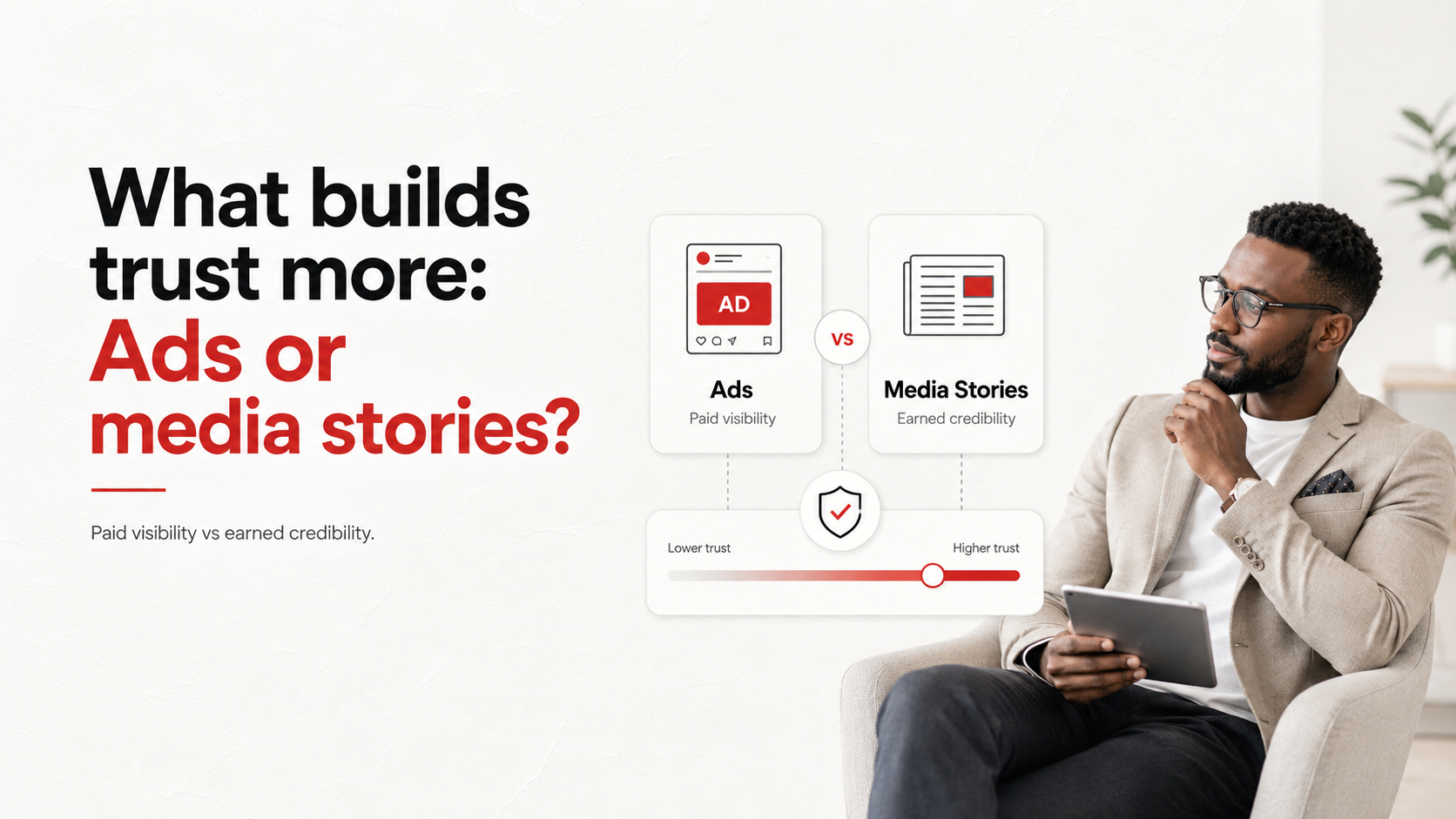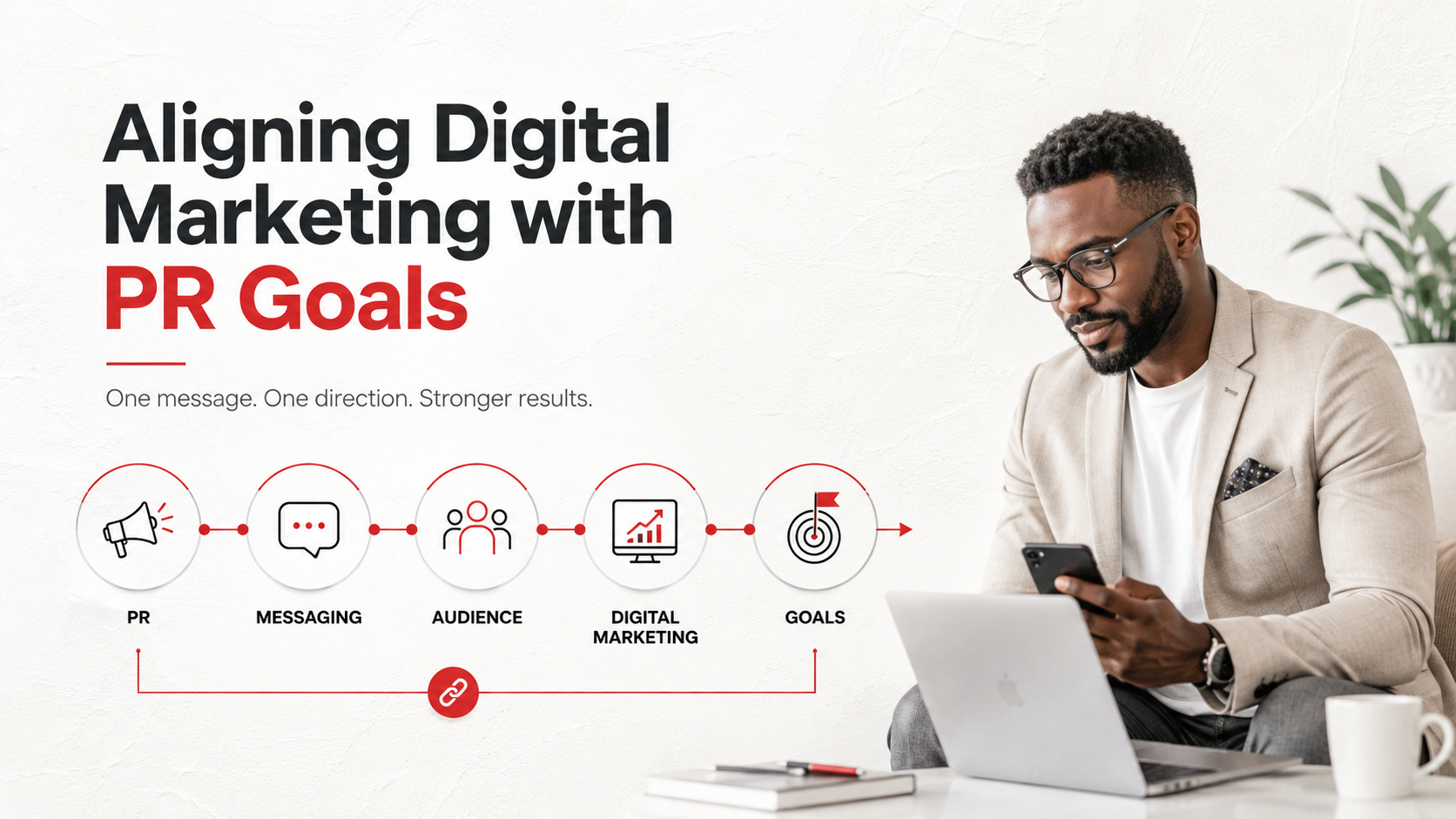
Many businesses treat Public Relations and Digital Marketing as two completely separate functions.
PR focuses on media coverage, brand reputation, and thought leadership, while digital marketing focuses on website traffic, lead generation, and conversions.
The problem is that when these efforts operate in silos, brands often miss opportunities to create a stronger and more effective customer journey.
Imagine a company securing a feature in a major publication, only for visitors to land on a website that does not reinforce the same message. Or a business running digital ads that promise one thing while its media coverage tells a completely different story.
When PR and digital marketing are aligned, every touchpoint works together to reinforce trust, visibility, and business growth.
Here is how businesses can align digital marketing with PR goals for stronger results.
1. Shared North Star
Define One to Two Core Outcomes
Every successful strategy begins with a clear destination.
One of the biggest mistakes brands make is trying to achieve too many goals at once. They want more awareness, more followers, more leads, more sales, more engagement, and more media coverage all at the same time.
While these goals are valuable, trying to pursue everything at once often leads to scattered efforts.
A better approach is to define one or two core outcomes that both PR and digital marketing can support.
For example:
- Building industry authority
- Generating qualified leads
- Increasing brand trust
- Expanding market awareness
Once these priorities are clear, every communication activity becomes easier to evaluate.
Before launching a campaign, ask:
- Does this strengthen our authority?
- Does this help attract qualified prospects?
- Does this reinforce our reputation?
When PR and marketing teams share the same objectives, campaigns become more focused and effective.
2. Every Touchpoint Should Support the Goal
Think about all the places customers interact with your brand.
They may discover you through:
- A media feature
- A LinkedIn post
- A Google search
- An advertisement
- Your website
- An email campaign
Each of these touchpoints should contribute to the same overall story.
If your goal is to position your company as a trusted industry leader, every channel should reinforce that perception.
Consistency builds confidence. Repetition builds recognition.
The strongest brands are not always saying different things; they are often saying the same important things across multiple channels.
3. Message Consistency
One of the easiest ways to align PR and digital marketing is to ensure they use the same core messaging.
PR campaigns often involve developing key messages about:
- What the company does
- Who it serves
- What makes it different
- Why it matters
Unfortunately, these messages sometimes stay within press releases and media interviews.
Instead, they should become the foundation for all marketing communication.
Your PR messaging can be repurposed into:
- Website headlines
- Landing page copy
- Social media captions
- Email campaigns
- Advertising campaigns
- Video scripts
This creates a seamless experience for your audience.
For example, if your PR campaign positions your company as a leader in sustainable construction, visitors should encounter that same message when they visit your website or social media platforms.
4. Consistency Builds Trust
Customers rarely make decisions after a single interaction.
They may see your company in the media today, visit your website tomorrow, and engage with your social content next week.
If those experiences feel disconnected, trust weakens.
However, when people encounter the same clear positioning repeatedly, confidence grows.
They begin to understand who you are, what you stand for, and why your solution matters.
This consistency creates credibility over time.
5. Funnel Fit
PR is incredibly powerful at generating visibility.
Media features, interviews, thought leadership articles, and speaking opportunities introduce your brand to new audiences.
They create awareness and establish credibility.
However, awareness alone does not automatically generate business results. People often need multiple interactions before they take action. This is where digital marketing becomes essential.
6. Retargeting Nurtures Interest
Imagine someone reads an article featuring your company. They visit your website but leave without making an enquiry. Without a nurturing strategy, that opportunity may disappear.
Retargeting helps keep your brand visible to interested prospects.
Whether through display ads, social media campaigns, or other digital channels, retargeting allows you to continue the conversation after the initial PR exposure. Instead of hoping people remember you, you strategically remain visible.
7. Email Helps Close the Gap
Email marketing is one of the most effective tools for turning awareness into action. After someone engages with your content, downloads a resource, or joins your mailing list, email provides an opportunity to deepen the relationship.
You can:
- Share valuable insights
- Demonstrate expertise
- Highlight client success stories
- Showcase media coverage
- Introduce relevant offers
This gradual approach builds trust and moves prospects closer to making a decision.
8. Map Content to Every Stage
Not every piece of content should serve the same purpose.
Different audiences need different information depending on where they are in the customer journey.
For example:
Awareness Stage
- Media features
- Thought leadership articles
- Industry commentary
- Educational content
Consideration Stage
- Case studies
- Testimonials
- Comparisons
- Expert insights
Decision Stage
- Product demonstrations
- Service breakdowns
- Consultations
- Offers and proposals
When PR and digital marketing work together across the funnel, customers experience a natural progression from awareness to trust to action.
Final Thoughts
PR and digital marketing are often treated as separate disciplines, but the most successful brands understand that they are stronger together.