Many business owners use Public Relations (PR) and Marketing interchangeably. While they work closely together, they serve very different purposes in building a brand.
Understanding the distinction between PR and Marketing can help you invest wisely, position your brand strategically, and avoid the common mistake of focusing on visibility without credibility or sales without reputation.
Let’s break it down.
What Is Marketing?
Marketing is the process of promoting and selling your products or services. Its primary goal is to drive revenue.
Marketing answers questions like:
- Who is our target audience?
- What problem are we solving?
- How do we convert attention into sales?
- What channels will bring the highest ROI?
Marketing includes:
- Social media ads
- Email campaigns
- Influencer promotions
- Product launches
- Sales funnels
- Paid advertising
- Promotions and discounts
In simple terms, marketing drives demand. It creates awareness and pushes customers toward making a purchase decision. The results of marketing are often measurable in numbers: clicks, leads, conversions, revenue, and customer acquisition cost.
What Is Public Relations (PR)?
Public Relations focuses on reputation, credibility, and perception.
PR answers different questions:
- How is our brand perceived in the market?
- Do people trust us?
- Are we positioned as experts?
- What narrative surrounds our brand?
PR includes:
- Media placements
- Press features
- Thought leadership articles
- Interviews
- Brand storytelling
- Corporate communications
- Crisis management
Unlike marketing, PR is not directly about selling. It is about building trust and authority. When a respected media outlet features your brand, when a founder is invited to speak on a panel, or when your company is recognised in an industry report, that’s PR at work. PR builds long-term equity. Marketing converts attention into sales. PR builds the credibility that makes those sales easier.
The Core Difference: Control vs Credibility
One of the simplest ways to understand the difference is this:
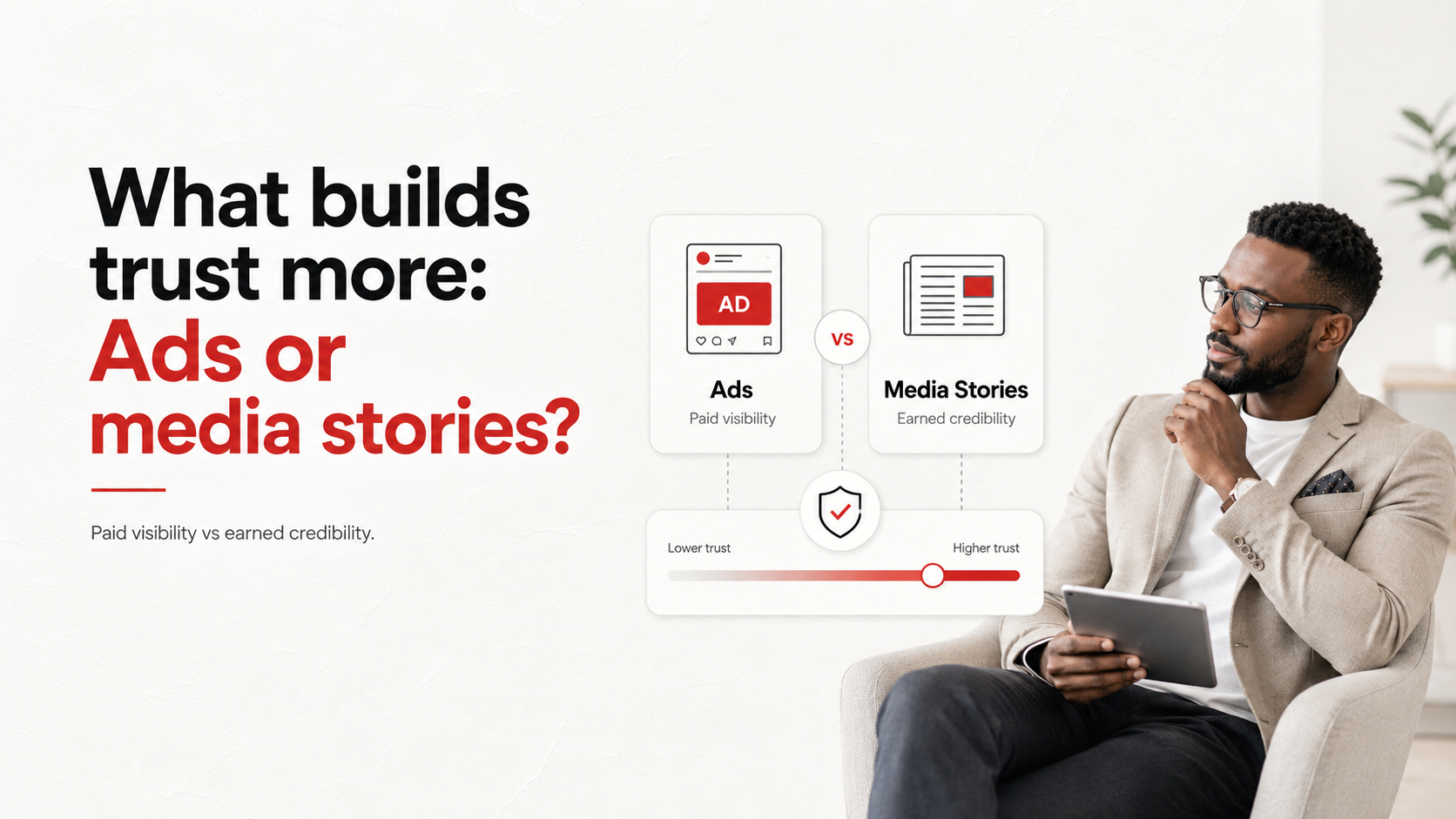
- Marketing is paid and controlled messaging.
- PR is earned and credibility-driven exposure.
When you run an ad, you control the message, visuals, timing, and placement. When you get featured in the media, the exposure is earned. It comes with third-party validation, which often carries more weight in the minds of consumers. People expect brands to promote themselves. But when a respected platform talks about you, it increases trust dramatically. That trust shortens the buying decision process.
When You Focus Only on Marketing
Many businesses invest heavily in marketing but neglect PR. The result?
- High ad spend
- Low trust
- Constant need to “convince” customers
- Short-term growth spikes followed by slowdowns
Without authority positioning, brands often compete on price rather than value. If customers don’t perceive you as credible or premium, your marketing has to work harder to persuade them.
When You Focus Only on PR
On the other hand, some brands gain visibility but struggle with conversion.
They may:
- Get featured in media
- Have strong brand recognition
- Be known in industry circles
But without structured marketing funnels, the attention does not translate into consistent revenue.
PR builds reputation. Marketing captures opportunity.
Why Modern Brands Need an Integrated Approach
Today’s market is noisy. Attention is expensive. Trust is fragile. Consumers are more skeptical, more informed, and more selective than ever.
An integrated approach means:
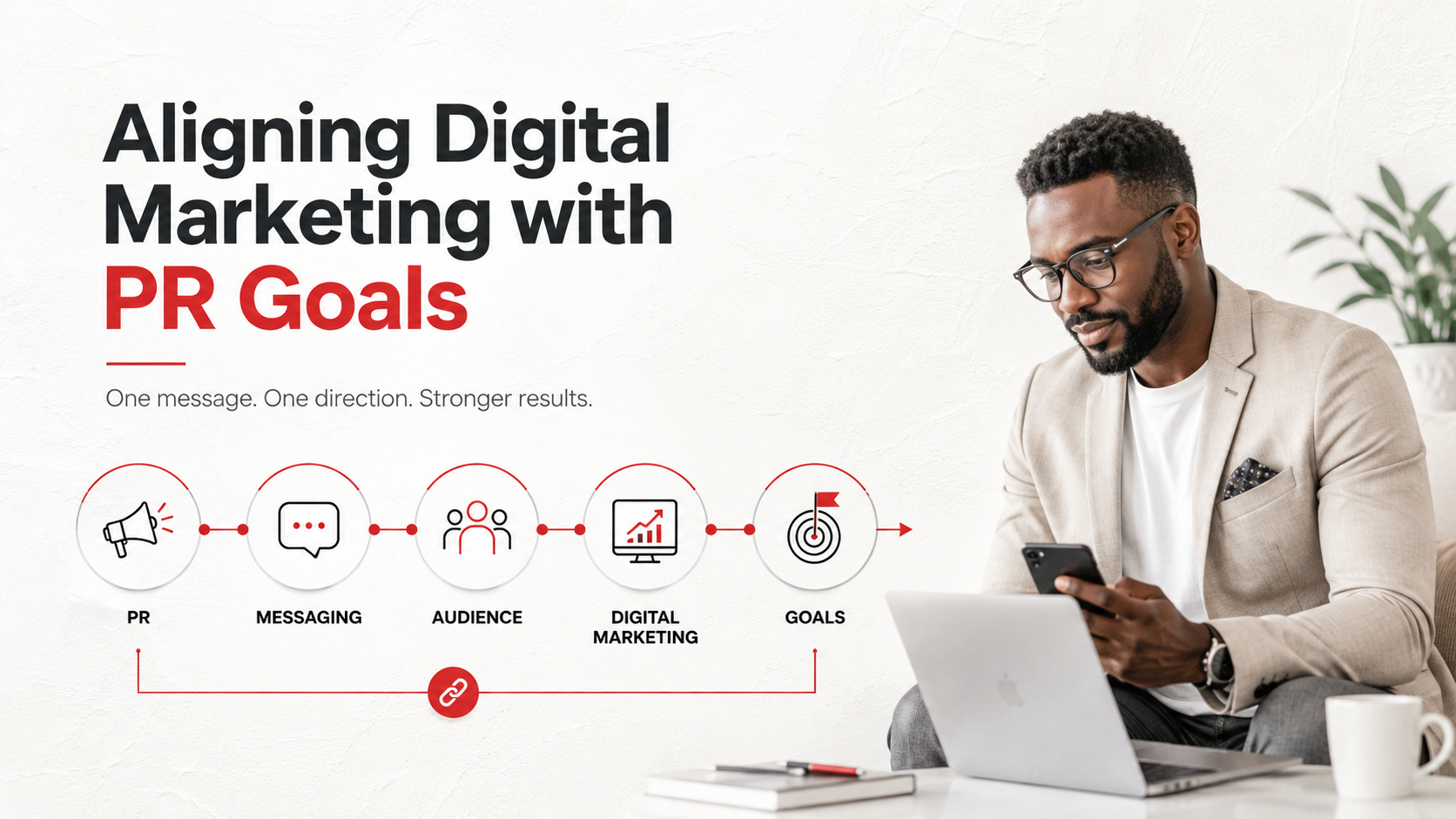
- PR builds authority.
- Marketing amplifies the authority.
- Sales systems convert the attention.
When someone sees your ad and remembers they’ve also seen you featured somewhere credible, trust increases instantly. That’s when brand equity begins to work in your favour.
A Simple Analogy
Think of marketing as the engine and PR as the reputation of the vehicle.
You can have a powerful engine (ads, campaigns, promotions), but if people don’t trust the brand, they hesitate to get in.
PR ensures people feel safe, confident, and aligned with your brand. Marketing ensures they know where to buy.
Final Thoughts: It’s Not PR vs Marketing, It’s PR and Marketing
The debate should never be “Which one is better?”
The smarter question is: At what stage does your brand need each more strategically?
Early-stage brands may focus more on marketing for traction. Growing brands should invest in PR to build authority and long-term value. Established brands must use both in harmony to maintain dominance.
In today’s crowded market, visibility without credibility is fragile and credibility without visibility is wasted. The brands that win understand how to balance both.